How Precision Bottom-Bracket Calibration Protects Your Garage Lifting Cables From Fraying
The Physics of Cable Travel and Asymmetric Tension
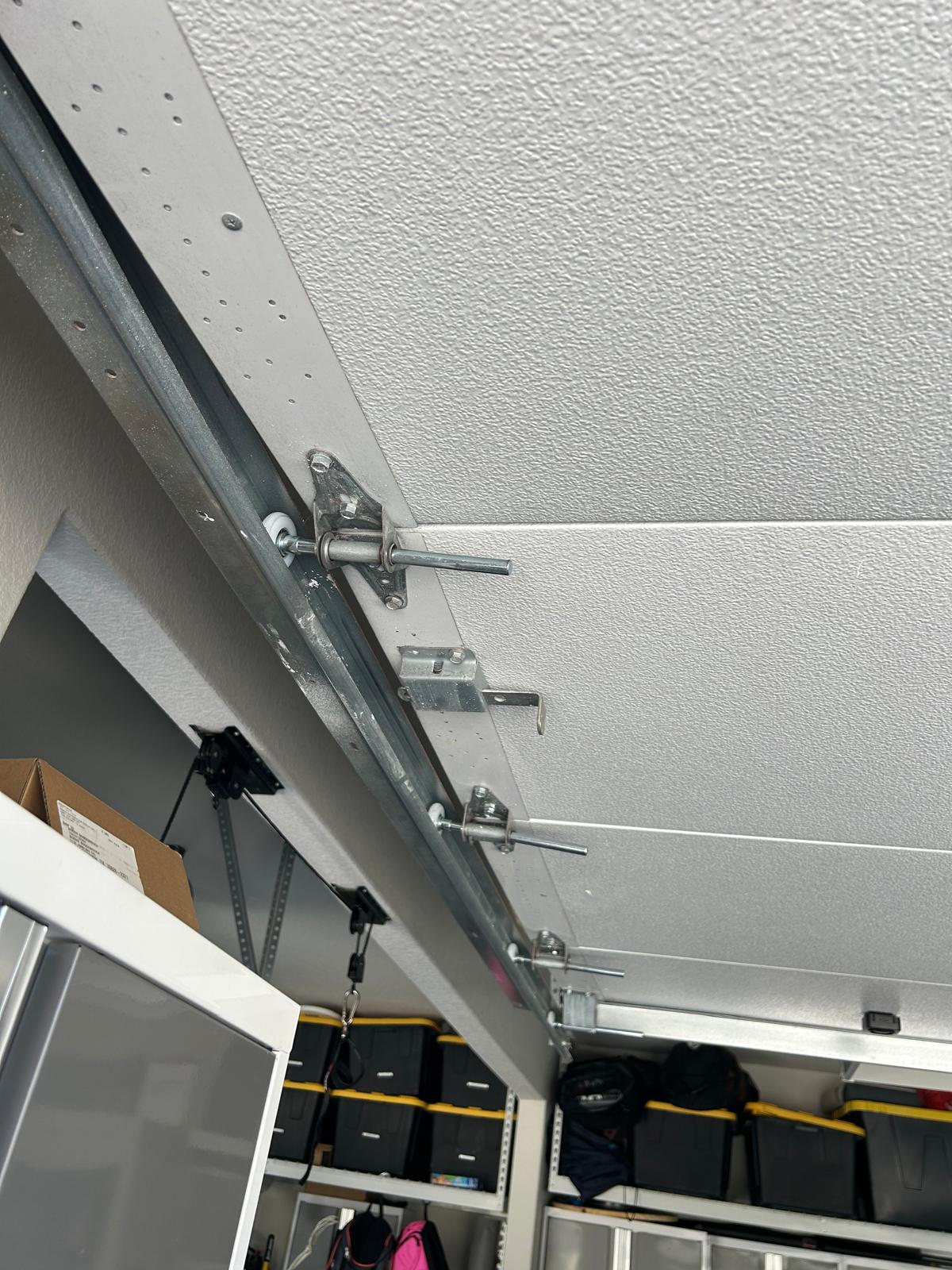
To understand why bottom-bracket alignment is so critical, you have to look at how a garage door transitions from its vertical closed state to its horizontal resting position. As the overhead torsion shaft spins, it winds the lifting cables onto grooved aluminum drums. For the door to ascend smoothly, the cables must travel in a perfectly straight, vertical line from the bottom bracket straight up to the drum. If a bottom bracket is installed crookedly, or if it shifts out of position due to loose fastening hardware, it forces the cable to travel at an angle. This misalignment causes the steel strands to scrape continuously against the metal track or the edge of the bracket during every single cycle.
The Hidden Danger of Abrasive Friction and Steel Fraying
The lifting cables utilized in modern garage door assemblies are woven from multiple strands of high-tensile galvanized steel, engineered for immense vertical weight capacity but highly sensitive to lateral friction. When a misaligned cable continuously rubs against a sharp metal surface, the protective zinc coating is scraped away, exposing the raw steel underneath to ambient humidity and rapid oxidation. Over time, individual outer strands begin to fatigue, fracture, and unravel—a process known as fraying. A frayed cable is a ticking mechanical time bomb; as more strands snap, the remaining wire loses its structural integrity until it fails completely under tension.
Preventing Catastrophic Free-Fall Failures and Track Jamming
When a garage door lifting cable snaps while the door is in motion, the consequences are immediate and dangerous. Because the overhead torsion spring instantly loses its connection to that side of the door, all the lifting power vanishes on one side. The heavy door drops violently, twisting sideways within the tracking network and jamming the roller wheels so tightly into the rails that the entire frame can bow or tear away from the wall framing. This sudden imbalance completely destroys the door panels, strips the internal nylon drive gears of your automatic opener motor, and poses a severe physical safety risk to anyone standing beneath the threshold.
Hardening Your Bottom Hardware Against Corrosive Runoff
Because bottom brackets are situated flush with the garage floor, they sit directly in the danger zone for moisture accumulation, road salt tracking, and chemical runoff. Standard builders-grade steel brackets can quickly develop deep surface rust that eats away at the cable anchor pins. Premium replacement packages utilize heavy-duty, hot-dipped galvanized steel or industrial stainless steel brackets that possess immense resistance to atmospheric corrosion. Ensuring these brackets remain structurally sound and properly lubricated prevents the metal around the cable loop from weakening, verifying that your primary lifting anchors remain rock-solid through any weather crisis.
The Precision Engineering Protocol for Safe Bracket Service
Because the bottom brackets are under continuous, immense tension from the overhead torsion springs, attempting to loosen or adjust them as a DIY weekend project is incredibly dangerous. A single turn of a bolt while the spring is wound can cause the bracket to tear away with explosive force, risking severe physical injury. A certified professional technician handles this service by fully pinning the torsion shaft to isolate the spring tension before touching any lower hardware. Every bracket is laser-aligned to match the precise pitch of your cable drums, ensuring perfectly balanced tracking, smooth operation, and total long-term safety for your home.