How Powder-Coated Hardware Kits Shield Residential Garage Doors from Coastal Salt-Air Corrosion
The Chemical Mechanics of Atmospheric Salt-Air Oxidation
To understand why standard garage hardware fails in maritime climates, you have to look at the chemistry of oxidation. Standard builders-grade hardware is coated in a thin layer of zinc, a process known as galvanization. While this zinc layer protects steel against ordinary rain, airborne sodium chloride (salt) molecules radically accelerate the breakdown of the protective coating. Salt acts as an aggressive electrolyte when combined with ambient moisture, creating a highly corrosive micro-climate on the metal surface. Once the thin zinc layer is consumed, the underlying raw steel reacts with oxygen, forming iron oxide—or destructive red rust—that physically weakens the metal.
The Industrial Chemistry Behind Protective Powder Coatings
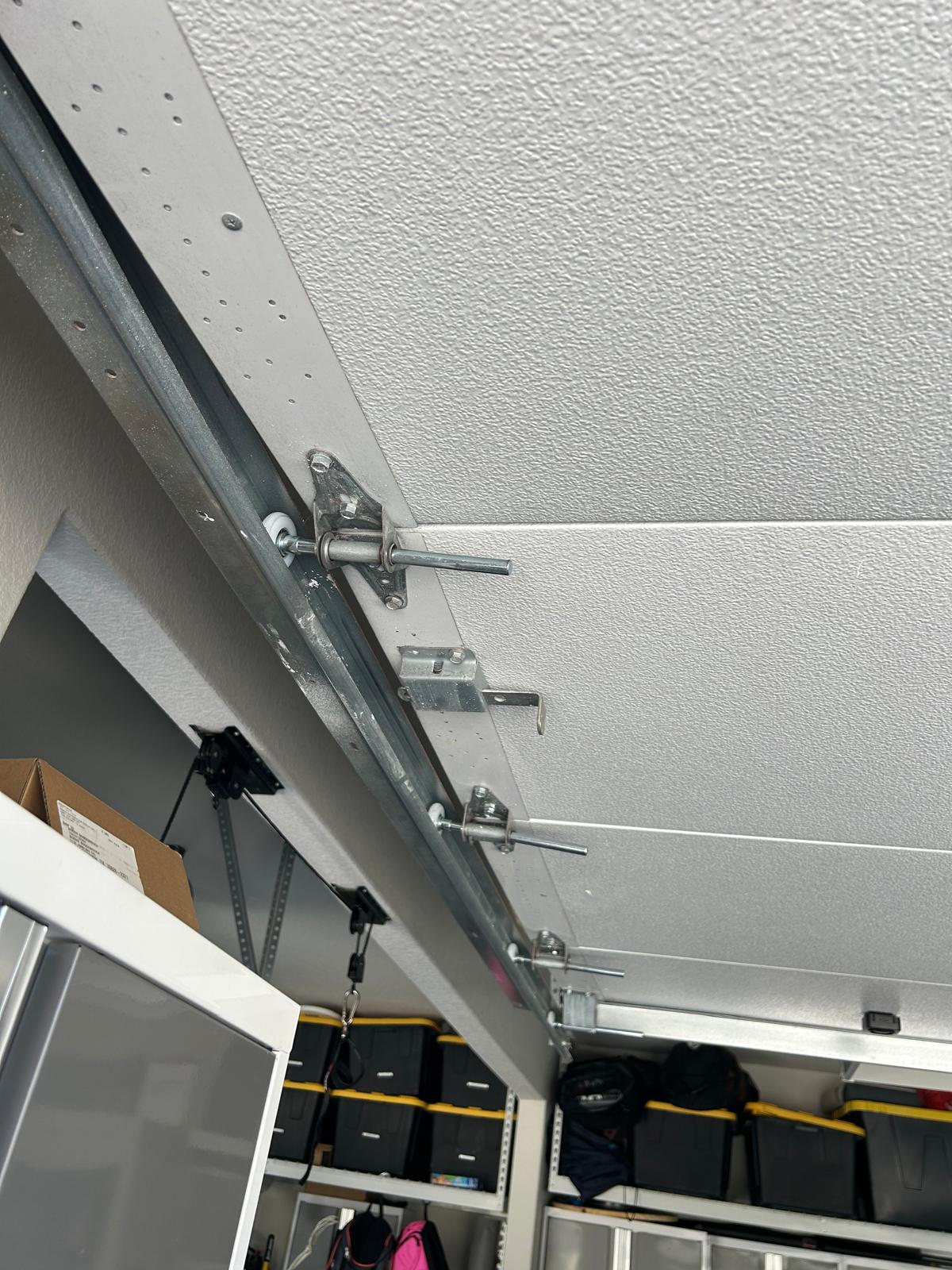
Upgrading to a powder-coated hardware kit completely alters the material defense profile of your garage threshold. Unlike standard liquid paint—which is sprayed on and leaves microscopic pinholes as the solvent evaporates—powder coating is an advanced dry-finishing process. Finely ground particles of pigment and protective polymer resins are electrostatically sprayed onto the heavy-gauge steel tracking, hinges, and torsion plates. The hardware is then placed into a high-temperature industrial curing oven, where the powder melts and chemically fuses into a continuous, non-porous polymer skin that completely seals the steel from the external atmosphere.
Eradicating Hardware Binding and Structural Cable Snaps
The damage caused by coastal rust extends far beyond cosmetic staining; it actively destroys the mechanical alignment of your garage door. As rust expands along the tracking channels and inside hinge pivots, it creates a rough, abrasive surface that binds the roller wheels and freezes the hinges mid-cycle. This sudden structural resistance forces your automatic opener motor to pull with excessive force, drawing higher electrical amperage and risking an expensive electronic board failure. Furthermore, salt air can rapidly corrode the bottom brackets holding your high-tension lifting cables, running the risk of a sudden cable snap that could drop the heavy door violently.
Dampening Rolling Vibration and Slicing Mechanical Noise
Beyond providing an impermeable barrier against salt-air corrosion, a premium powder-coated upgrade delivers a noticeable improvement in daily acoustic comfort. The thick, cured polymer coating applied to the interior of the track rails acts as a built-in vibration dampener. When your door's tracking rollers glide down a powder-coated runway, the metal-on-metal harshness of standard tracking is entirely replaced by a smooth, muffled roll. This dampening effect drops operational cycling noise levels significantly, preventing harsh rolling resonance from traveling through your home's wall framing and disrupting nearby living zones.
Precision On-Site Calibration and Multi-Point Hardware Tuning
Because retrofitting a garage door with heavy-duty powder-coated hardware involves working around high-tension lifting components, the installation process requires exact technical training and specialized equipment. A certified professional technician must securely pin the overhead torsion spring system to completely isolate the intense counter-balance forces before swapping out lower brackets or hinges. Every new powder-coated track segment is laser-aligned to guarantee absolute symmetry, and all fastening points are secured with corrosion-resistant fasteners, ensuring your home's largest moving threshold remains perfectly protected, balanced, and silent for decades to come.